Damian Huneycutt

Explore Damian’s path, credentials, and practical approach to designing healthcare environments that truly perform.
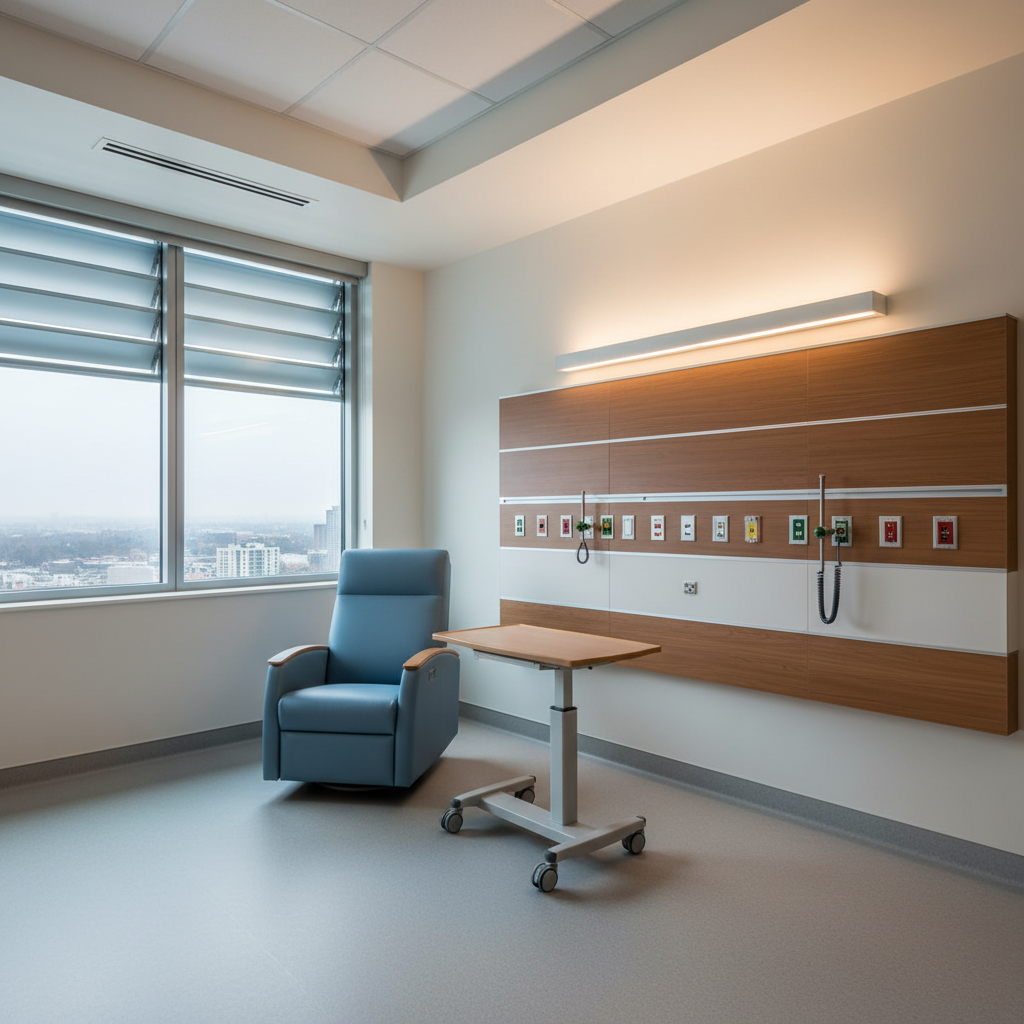
A high-performance hospital patient room shown without occupants, organized around a single headwall with integrated medical gases, power, and data, all neatly concealed behind warm wood-look panels and matte white surfaces. A large window with exterior sunshades frames a distant city skyline, flooding the room with diffused daylight. A recliner and overbed table are neatly positioned to optimize clear staff access and patient visibility from the corridor. Photographic realism from a slightly elevated corner angle, with balanced, natural lighting supplemented by dimmable cove lighting above the headwall. The mood is quiet, orderly, and safe, emphasizing infection-control-friendly materials, easily cleaned flooring, and carefully considered adjacencies that communicate thoughtful operations-driven planning and focus on patient experience.
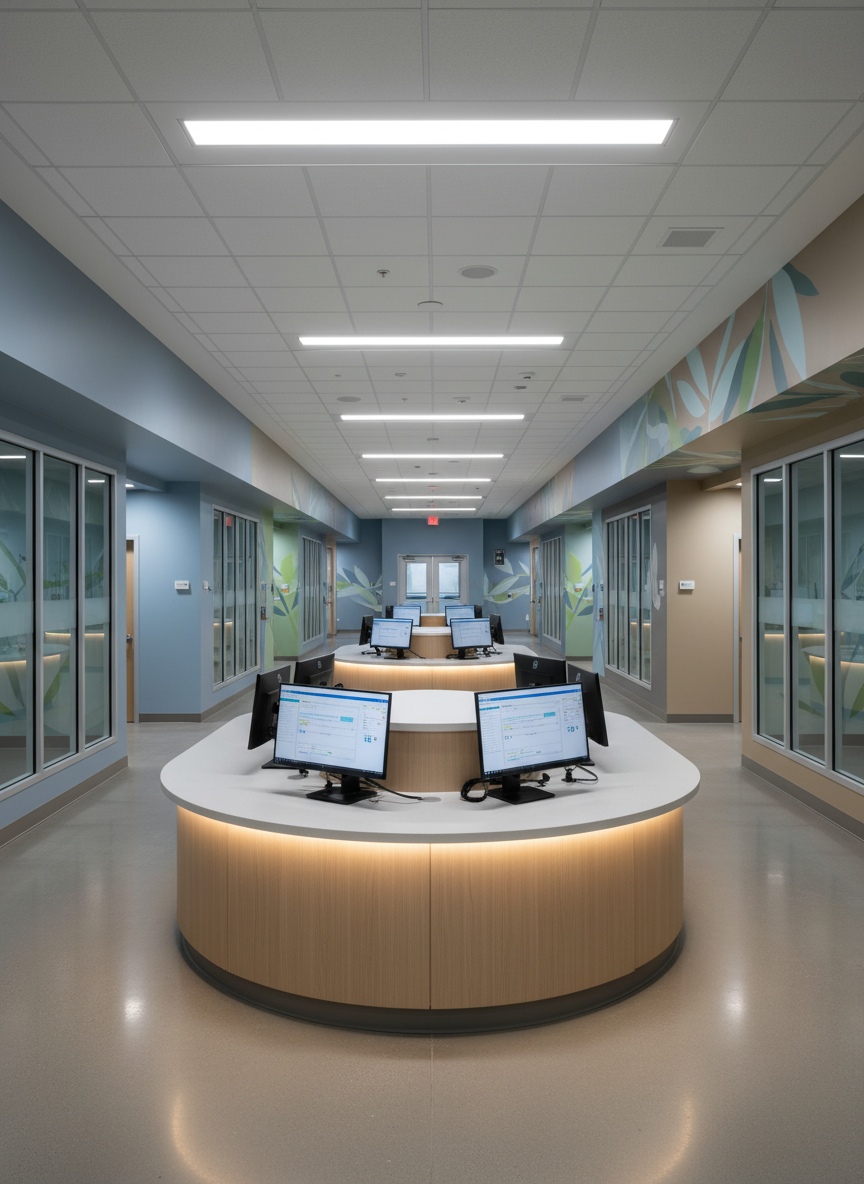
A compact, efficient nurse workstation with no people, positioned at the center of a racetrack-shaped inpatient unit. The station features a low, 360-degree counter in light oak laminate with integrated task lighting and multiple computer monitors, all cable-managed and clutter-free. Surrounding corridors clearly reveal direct sightlines into each patient room via large interior glass panels with privacy blinds. Photographic realism, shot from a slightly elevated viewpoint that captures the entire operational layout. Overhead, linear LED fixtures with uniform, neutral white light create even illumination without glare. The atmosphere is highly functional yet welcoming, with calm colors—soft blues and warm grays—supporting staff focus, while accent wall graphics with abstract, nature-inspired patterns reinforce a restorative, performance-oriented care environment.

Healthcare Architecture Grounded in Practice

Damian Huneycutt, AIA, NCARB, ACHA, is a healthcare architect who bridges clinical realities and design. He draws on years of operational experience to create environments that work—improving safety, flow, and patient experience while aligning facilities with organizational strategy.